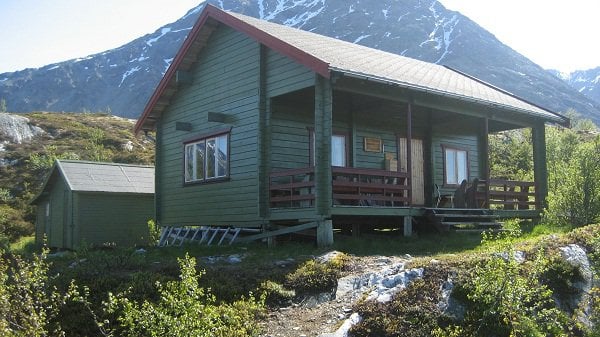
Guide to Norwegian Mountain Huts
A complete guide to DNT huts, staffed lodges and overnight stays in Norway's mountains. Learn how to plan your hut-to-hut hiking adventure across Norway.
Quick links
Don't want to read all this?
We've planned 2,000+ hiking trips. Send your dates, fitness and group size — we'll map the route and book every night.
Planning a multi-day trek in Norway? This comprehensive guide covers DNT hut accommodation, booking systems, what to pack, camping regulations, and practical tips for staying in mountain huts. Whether you're planning a family weekend at an accessible lodge or a serious high-mountain traverse, here's how to make the most of Norway's extensive network of mountain huts.
Norway has one of Europe's most extensive mountain hut networks, with over 550 cabins managed by the Norwegian Trekking Association (DNT). The system makes multi-day trekking accessible, comfortable and straightforward.
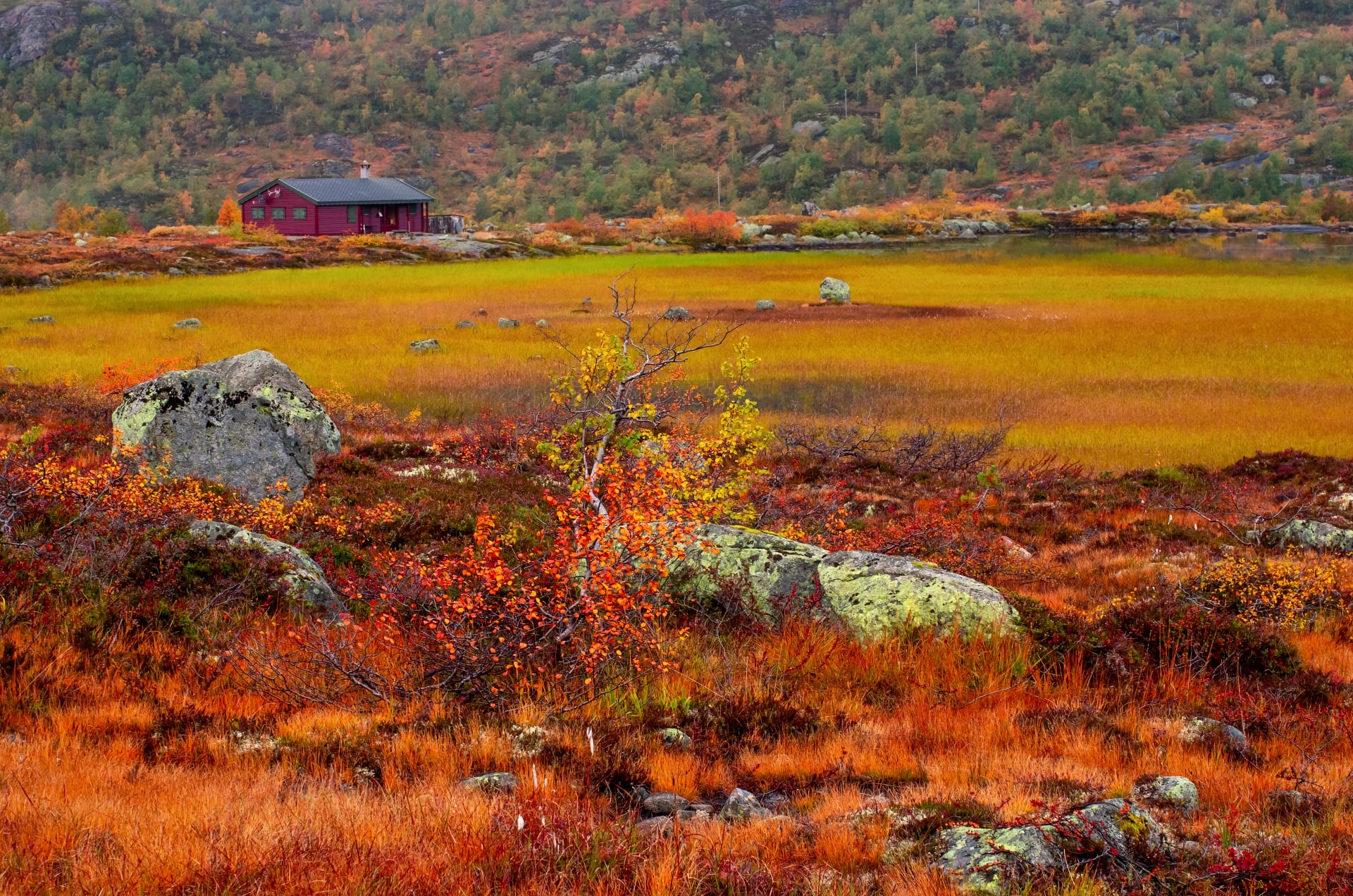
Hot meals, beds, and shelter right in serious mountain terrain transform a challenging hike into a mountain journey. Whether you're walking marked trails in Jotunheimen, exploring Hardangervidda's vast plateau, or trekking Lofoten's coastal peaks, the hut system opens up weeks of exploration without carrying heavy camping gear.
Where Are Norwegian Mountain Huts Located
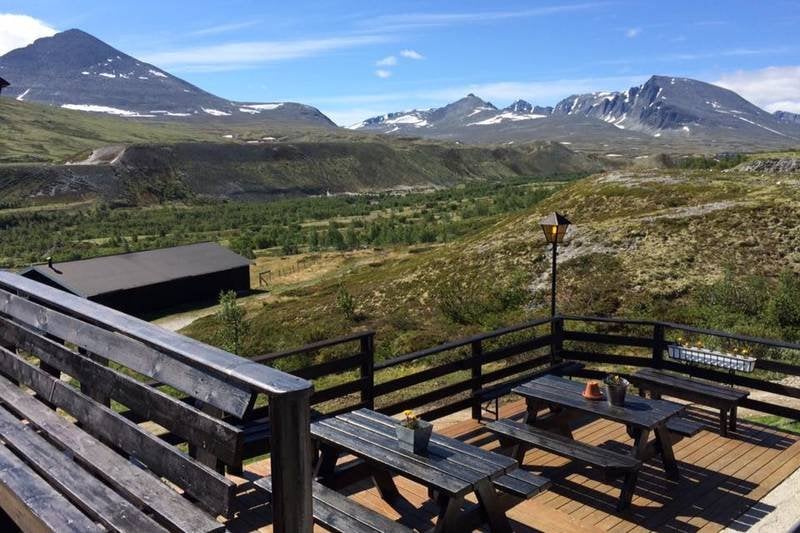
Mountain huts are spread throughout Norway, from southern highlands to Arctic Finnmark, covering coastal routes, forested valleys, and high-alpine terrain.
The highest concentration sits in southern Norway's mountain regions: Jotunheimen, Rondane, Dovrefjell, Hardangervidda and the areas around Bergen. These regions have dramatic peaks, glacial valleys and popular long-distance routes that create the greatest demand.
Most huts sit between 900 and 1,800 metres elevation, though some reach higher in alpine areas. They're typically spaced 4–8 hours walking distance apart, making it possible to chain them together into logical stages.
Some huts are just 2–3 hours from roads, perfect for families or less experienced hikers. Others require full-day approaches through wild terrain, rewarding you with genuine remoteness and solitude.
Types of Norwegian Mountain Huts
Norway has three main types of mountain huts, each offering different levels of service and comfort. Understanding the difference helps you plan your trek properly.
1. Staffed Huts
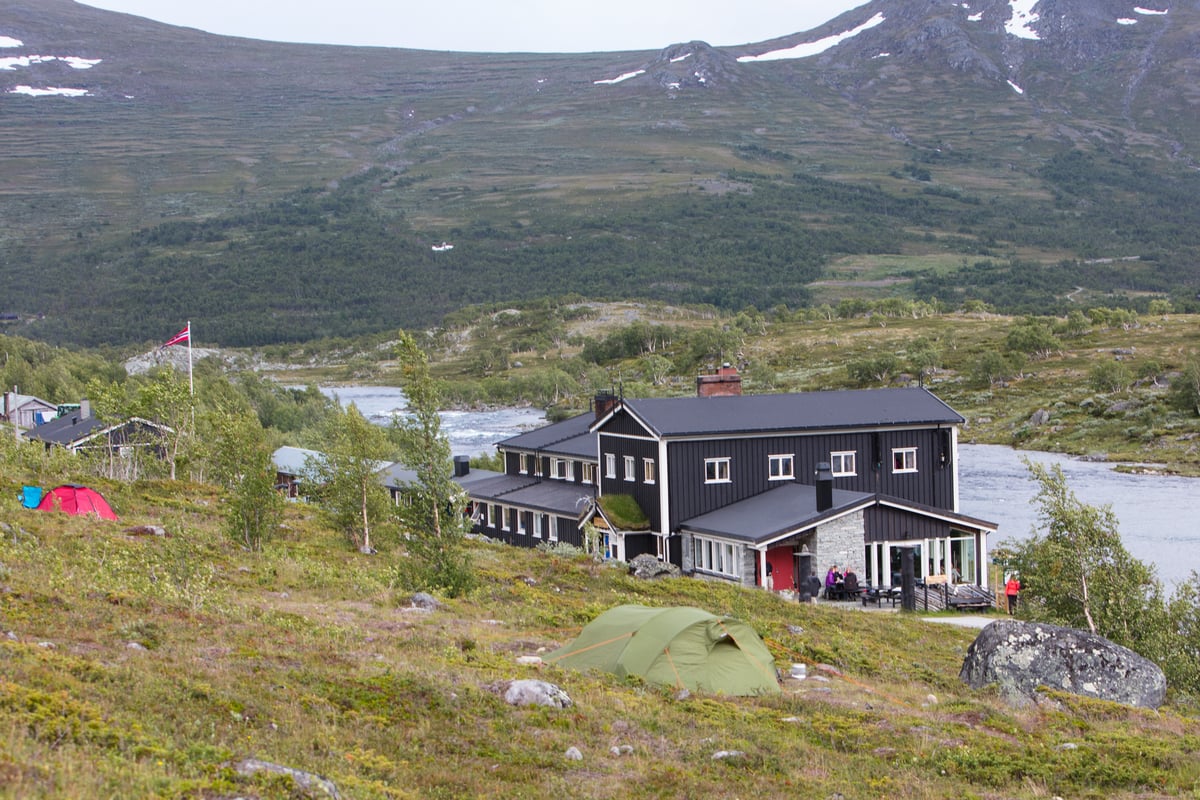
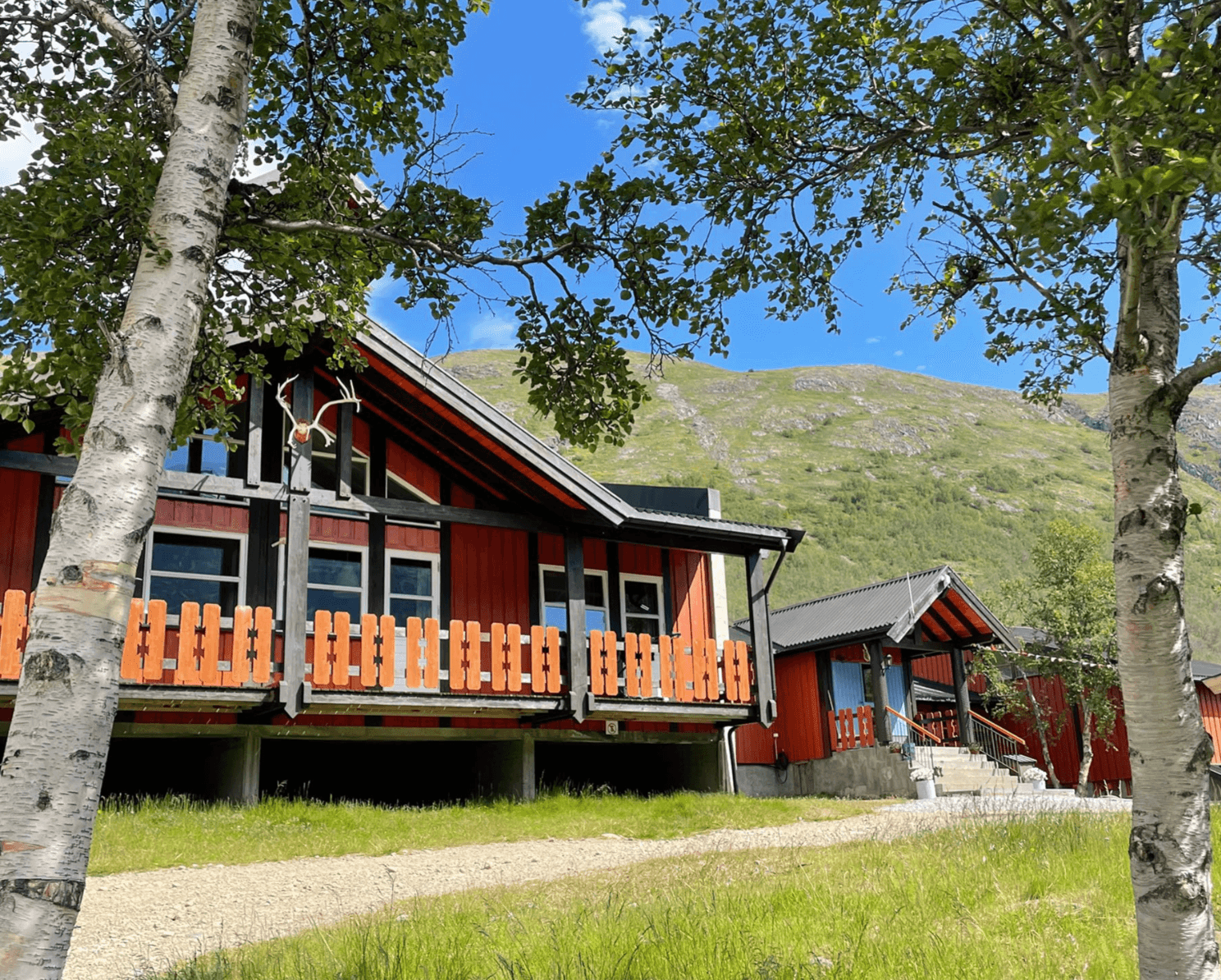
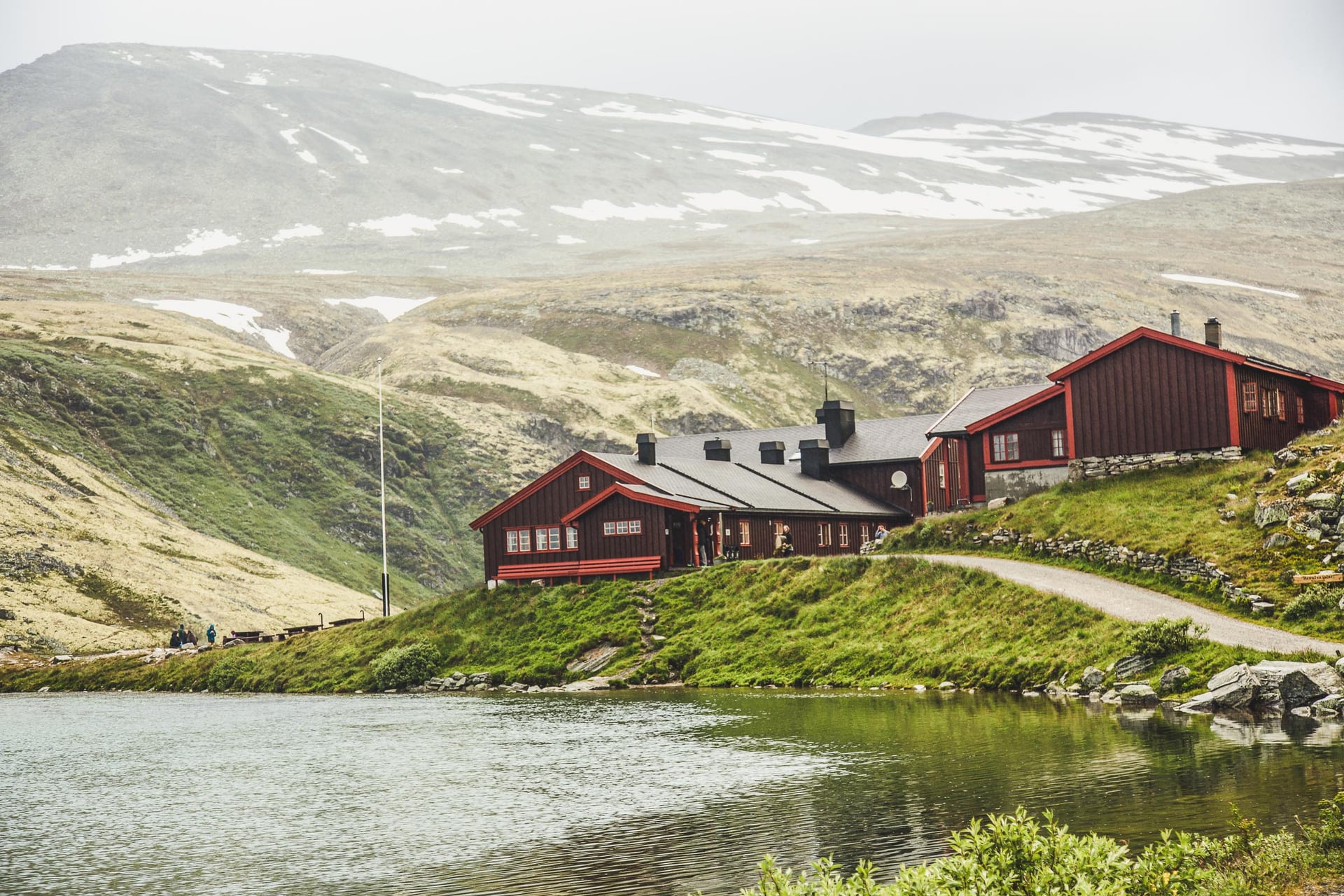
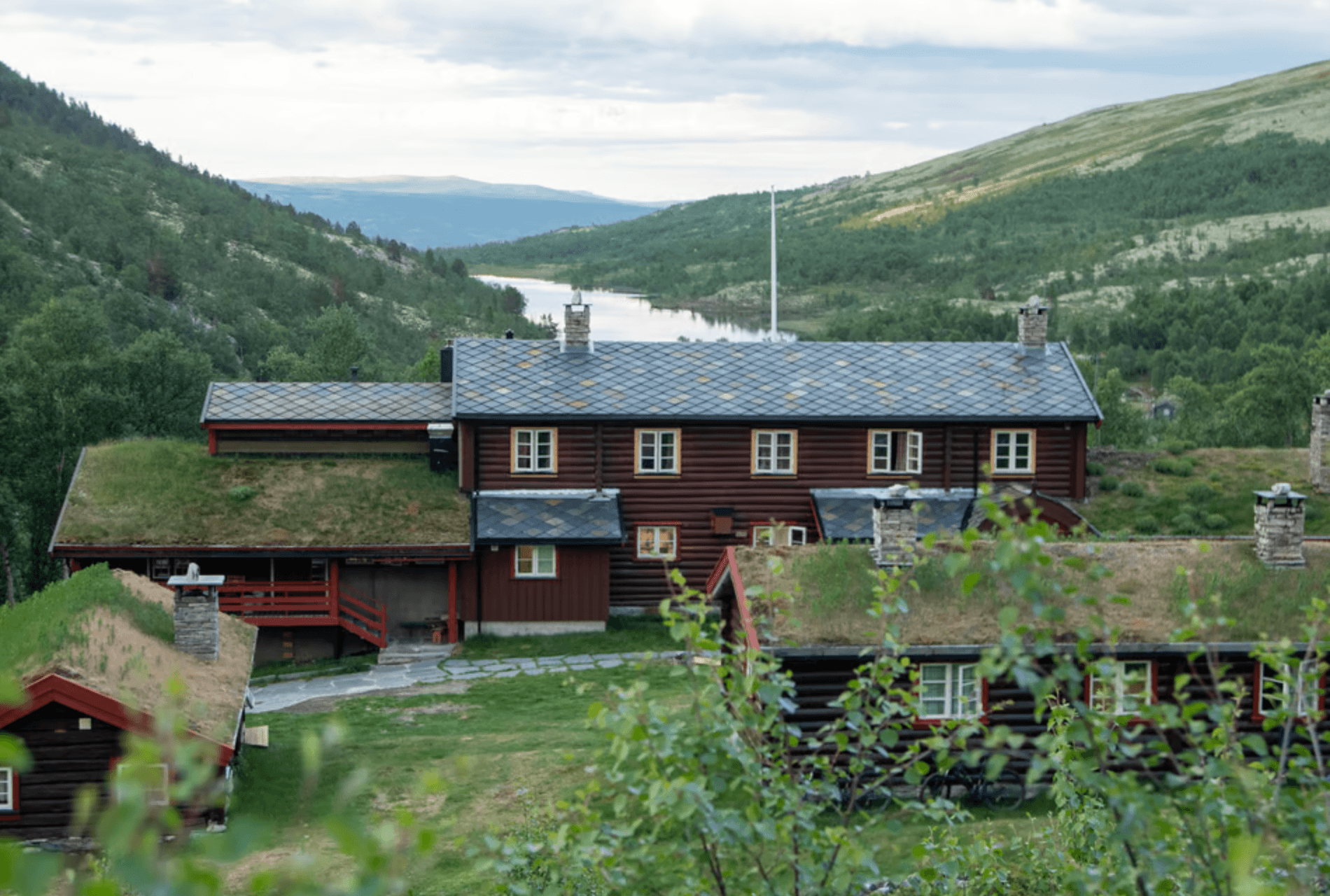
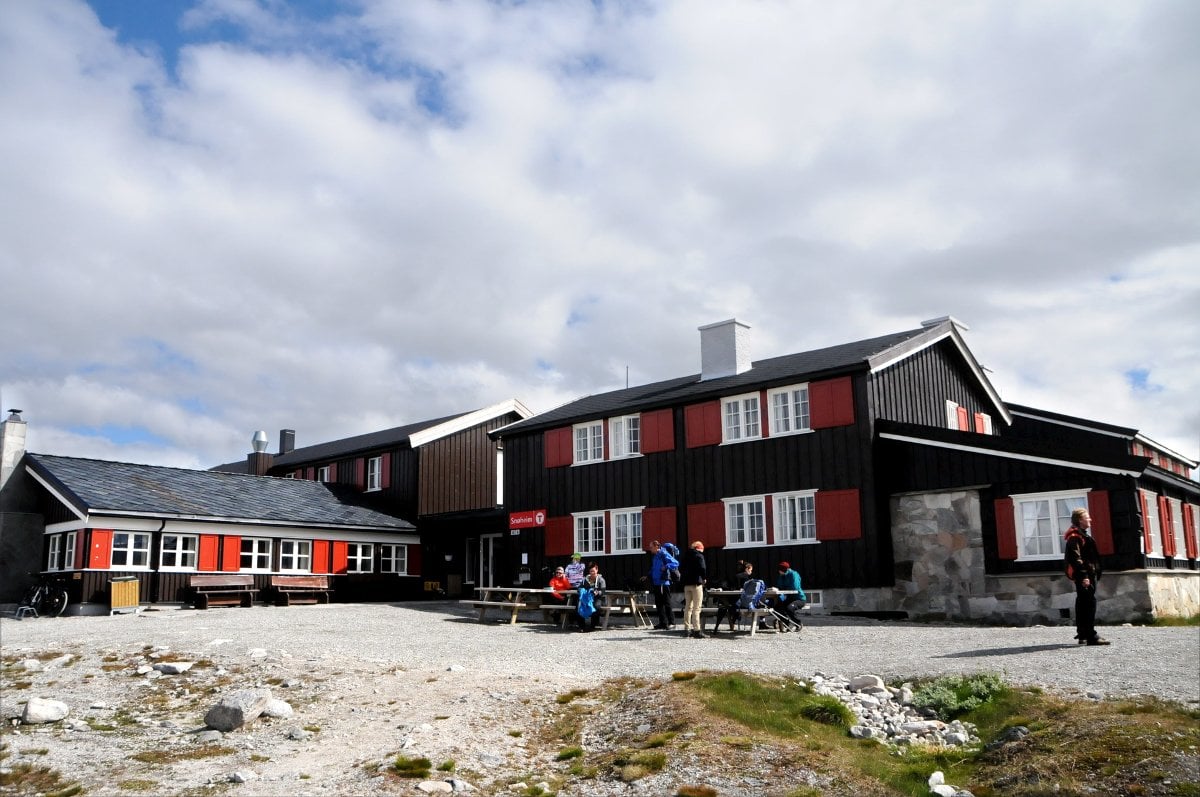
Staffed huts are the most comfortable option and the most common type hikers encounter in summer.
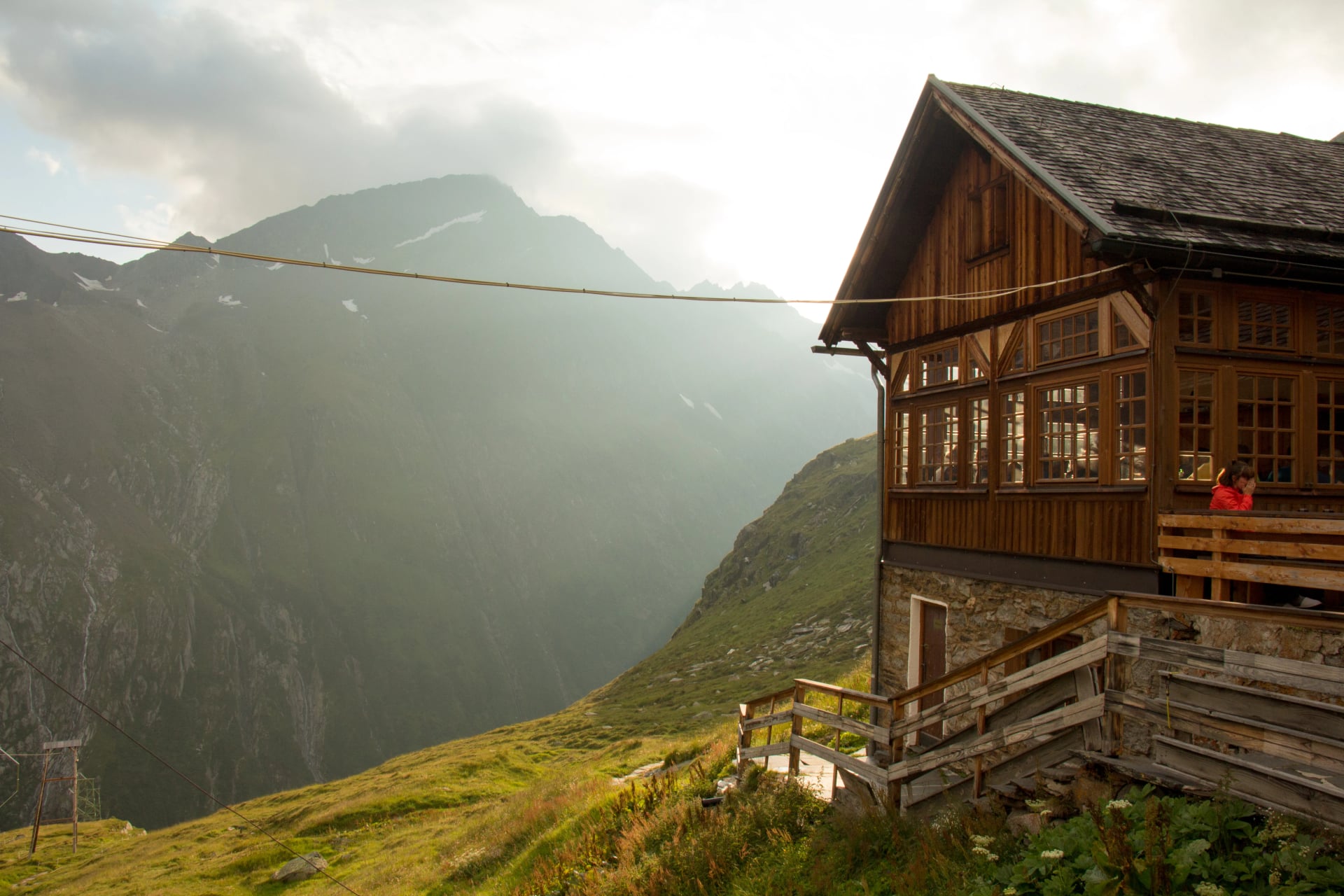
What they offer:
Open in summer, usually late June to late September
Warden lives on-site during this period
Hot meals provided (dinner and breakfast included)
Bedding provided (sheets, blankets or duvets)
Running water and basic washing facilities
Emergency communication
Weather forecasts and route advice from experienced staff
Social atmosphere with communal dining
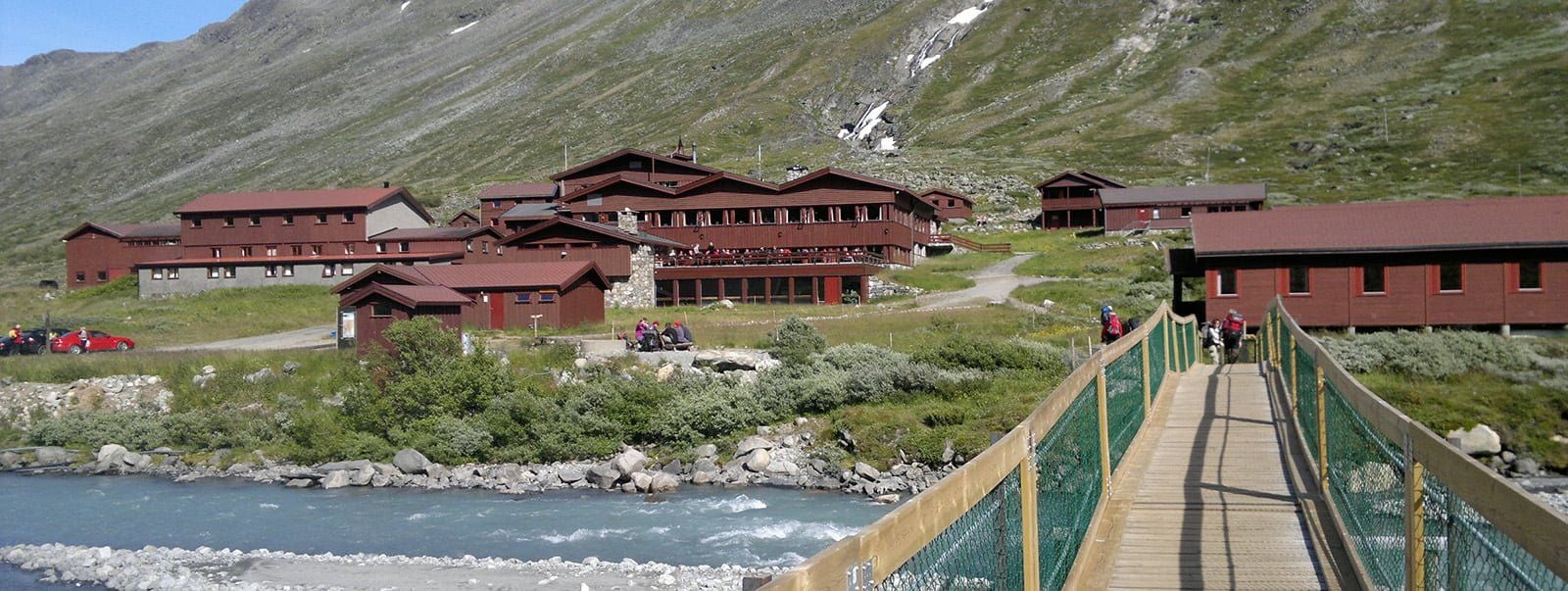
These huts feel welcoming and comfortable, though never luxurious. The focus remains on mountain simplicity rather than hotel amenities. Popular staffed huts include Gjendesheim, Spiterstulen, Glitterheim and Fondsbu in Jotunheimen, plus many others across southern Norway.
2. Self-Service Huts
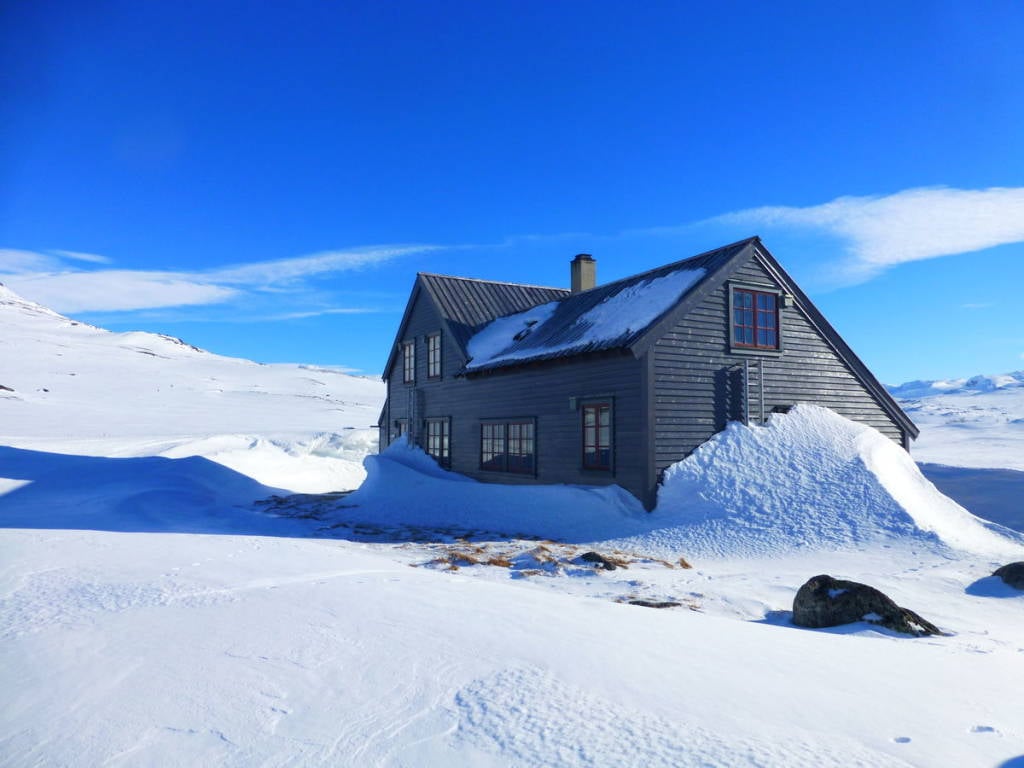
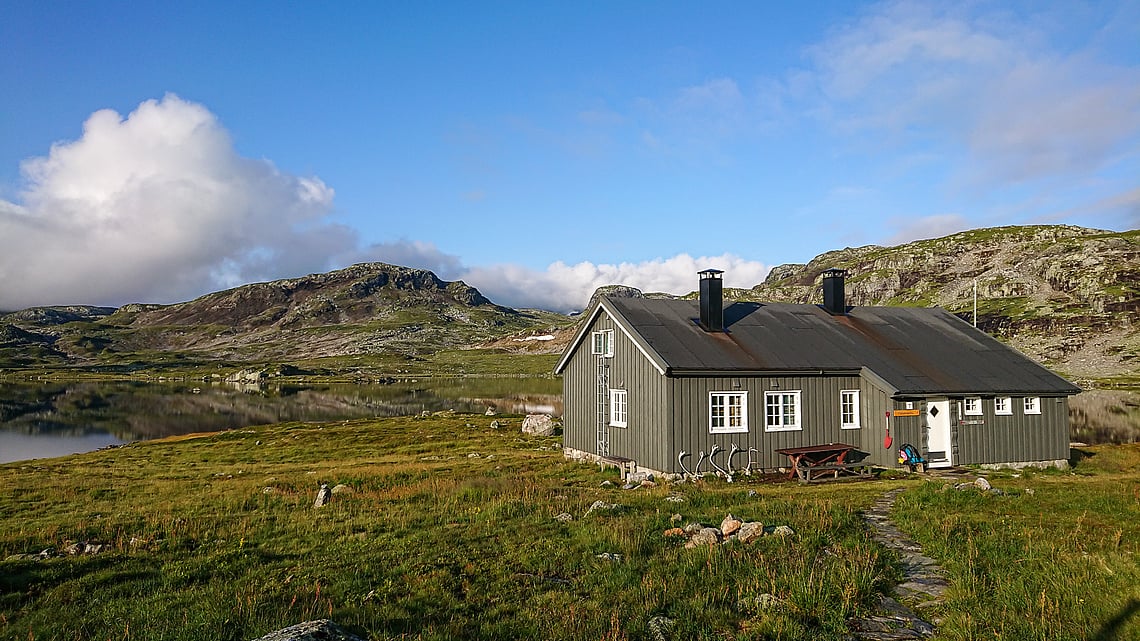
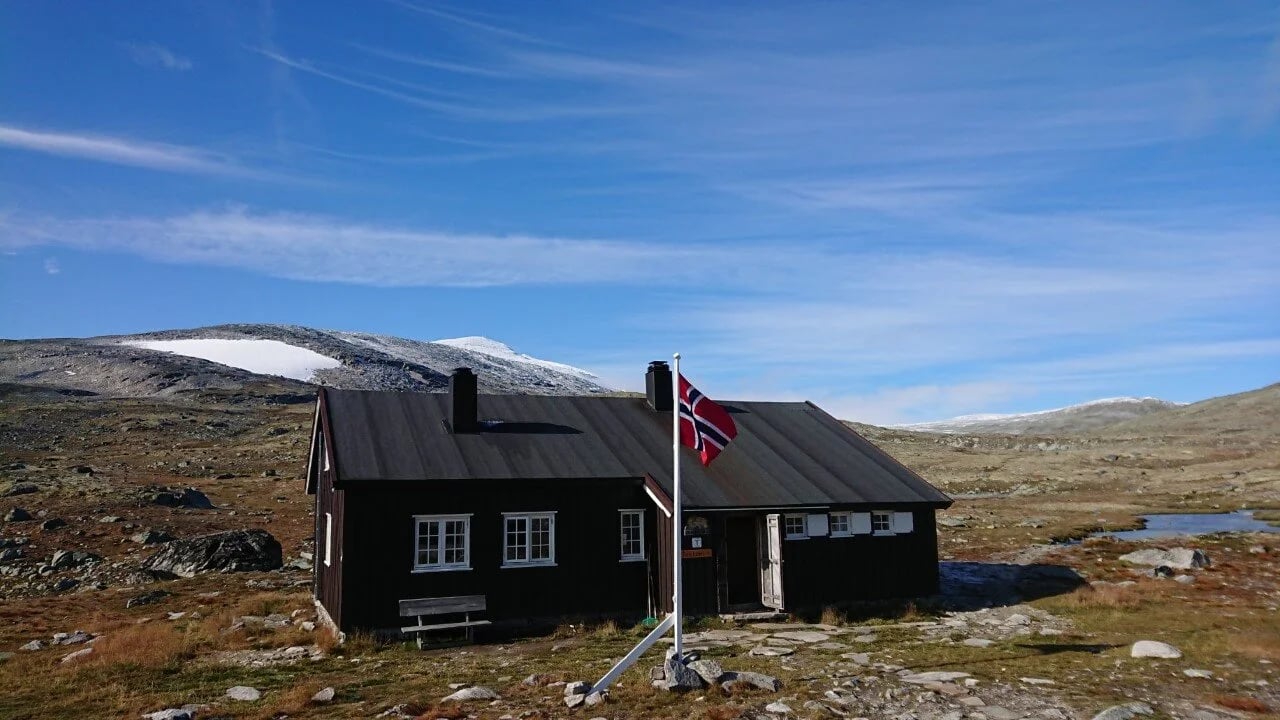
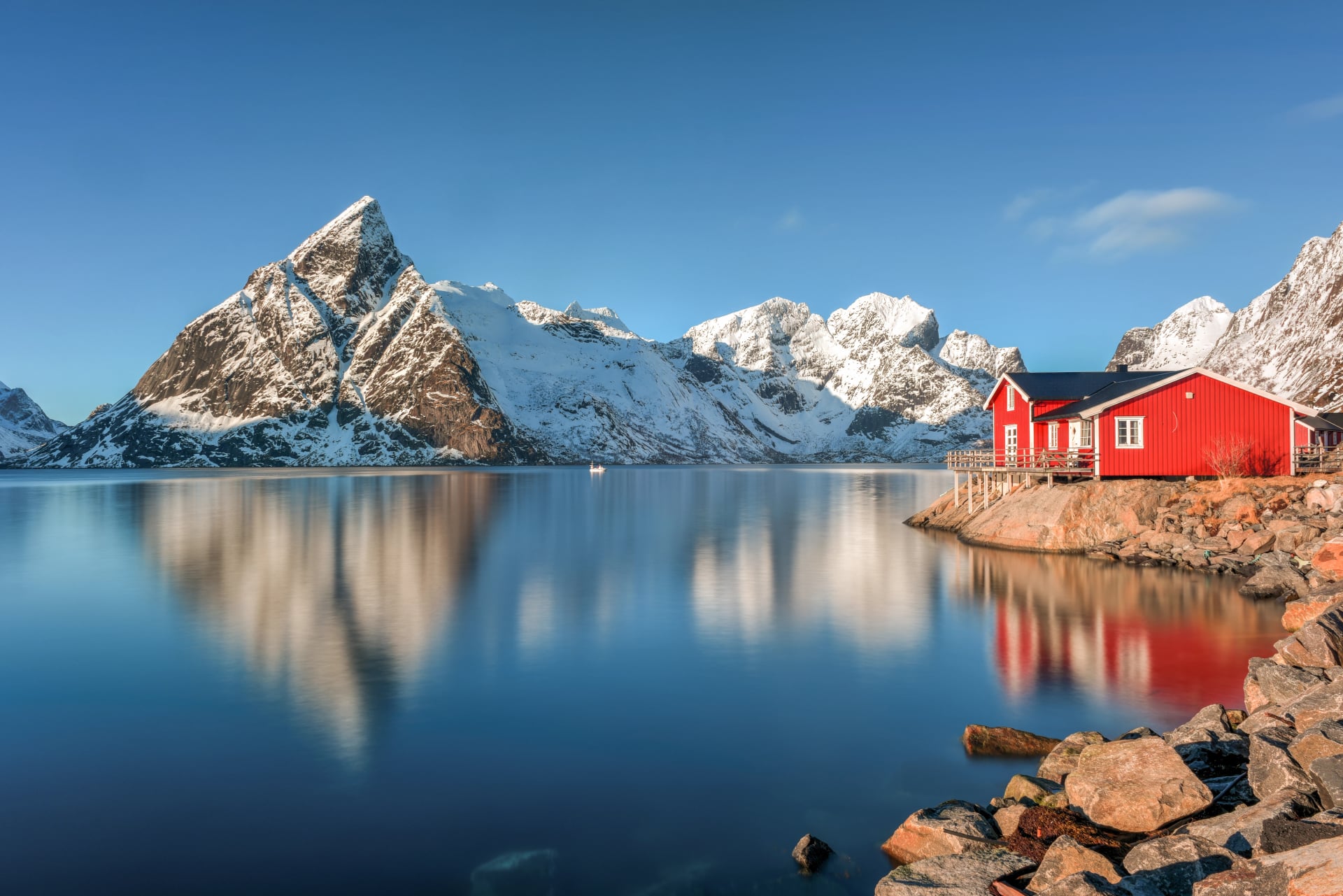
Self-service huts are open year-round but have no staff on-site. You let yourself in using a DNT key (available to members), manage your own meals, and maintain the hut yourself.
What they offer:
Open 24/7, all year
Basic kitchen facilities with gas stoves
Cooking equipment and utensils provided
Sleeping platforms with mattresses
No bedding provided (bring sleeping bag)
Firewood (sometimes for a fee)
Basic provisions available for purchase (honesty system)
Emergency shelter always available
Self-service huts require more self-sufficiency but offer flexibility and quieter experiences. They work well for experienced hikers and are essential for winter ski touring when staffed huts close.
3. No-Service Huts
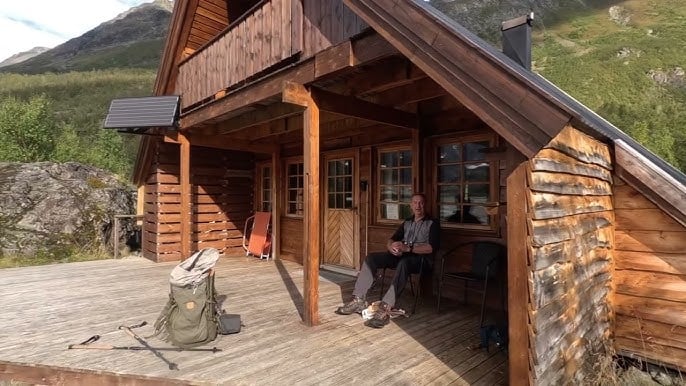
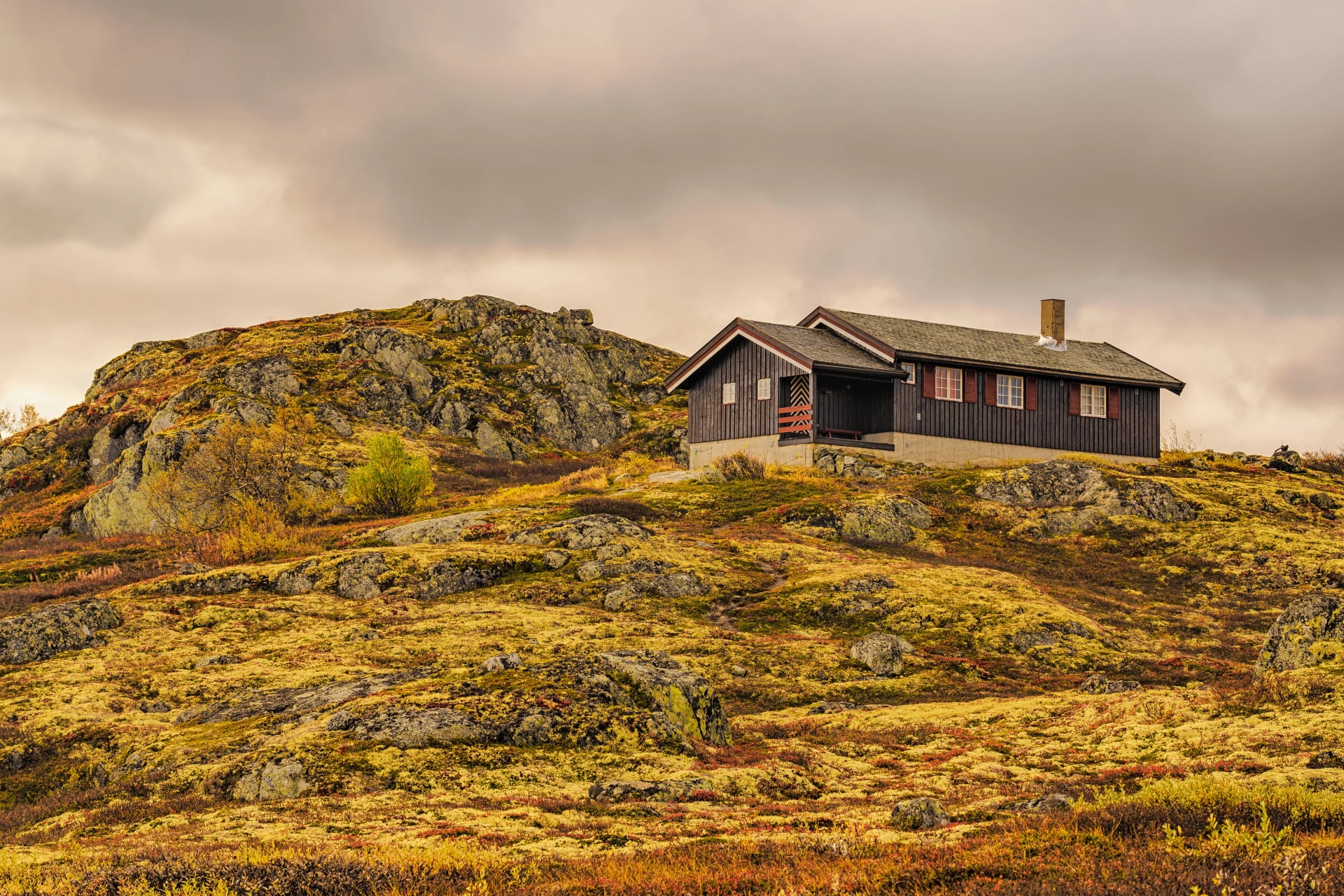
No-service huts are the most basic shelters, typically small stone or wood cabins in remote locations.
What they offer:
Emergency shelter only
No facilities, no provisions, no heating
Sleeping platforms (sometimes)
Unlocked and always accessible
Intended for emergencies or very experienced hikers
These huts serve as backup options in bad weather or for hikers seeking maximum solitude and self-reliance.
What to Expect at Norwegian Mountain Huts
Facilities and Comfort
Norwegian huts vary in size and comfort. Staffed huts typically host 30–100 hikers in peak season. Smaller self-service huts accommodate 10–30 people. The most popular huts like Gjendesheim can host over 100 people and book out weeks in advance during July and August.
Sleeping arrangements are usually in shared dormitories, ranging from 4-bed rooms to large communal spaces. Staffed huts provide bedding (sheets and blankets), but you must bring your own sleeping bag liner for hygiene. Self-service huts provide mattresses only—bring your full sleeping bag.
Private rooms are rare in mountain huts. Some larger staffed huts offer small private or semi-private rooms that book out months in advance and cost significantly more.
Showers are available in many staffed huts, typically coin-operated to limit water use. Self-service huts rarely have showers. Water comes from mountain streams and must be heated carefully, so usage is limited.
Huts have a dining room or common area, which serves as the social heart. In staffed huts, dinner is served at communal tables at fixed times (typically 7:00–8:00 PM). Breakfast is served 7:00–8:00 AM. The atmosphere is warm and social.
Toilets range from modern flush facilities in larger staffed huts to composting or outdoor toilets in smaller or remote huts. All huts maintain them carefully.
Electricity is limited. Charging outlets may be available only at certain times or for a fee. Many huts use solar panels or small generators. Wi-Fi is rare, and phone signal is often weak or nonexistent at high altitude.
Drying rooms are standard in staffed huts for wet gear and boots. Self-service huts may have a drying area near the stove.
Norwegian Hut Cuisine
Staffed huts serve simple, hearty Norwegian mountain food. Wardens prepare meals for dozens of hungry hikers using limited kitchen facilities at altitude. Despite constraints, the food is almost always good and plentiful.
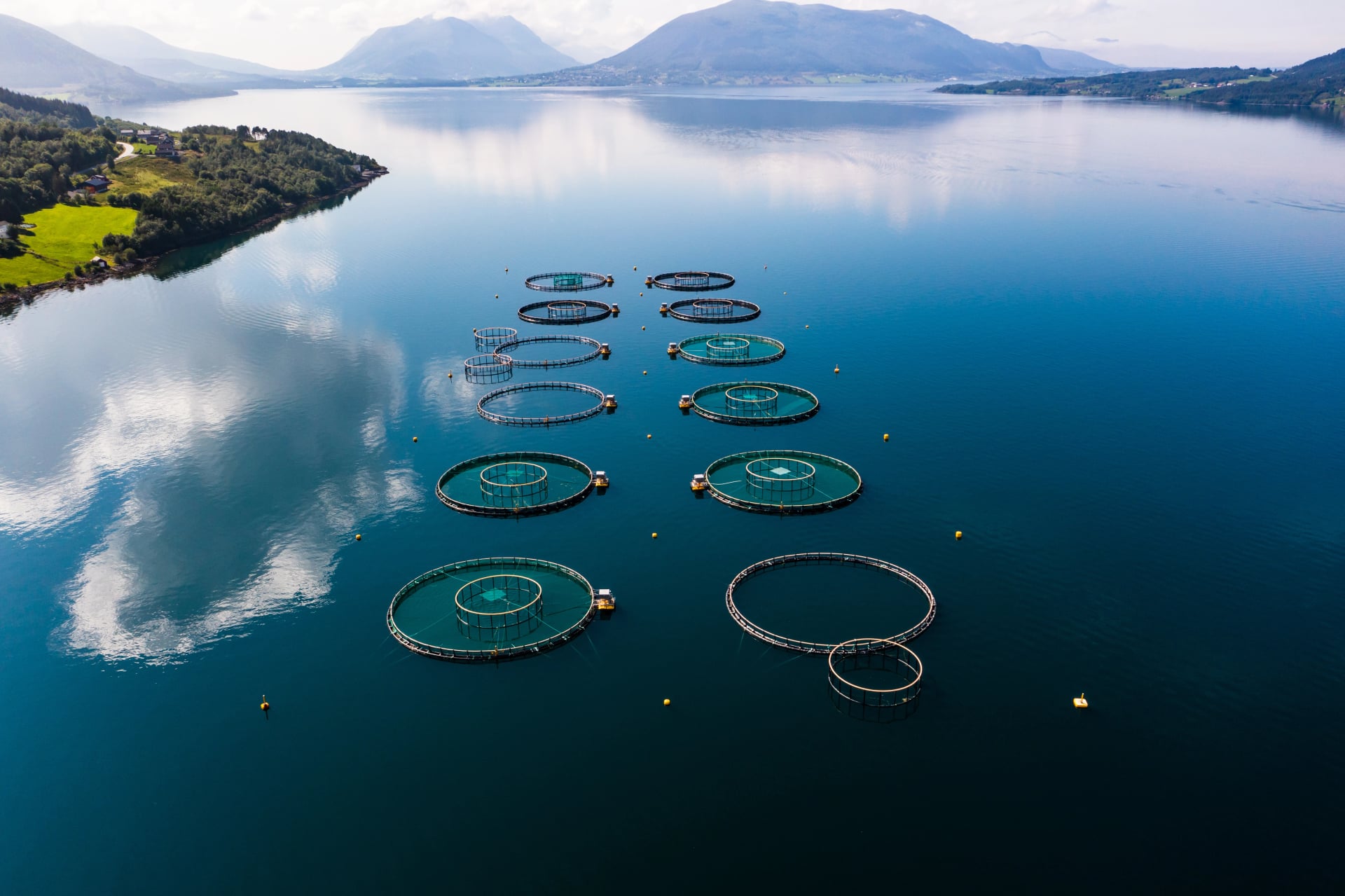
Fish cages in Central Norway summer day
Typical dinner menu:
Soup (often vegetable or meat-based)
Main course: pasta, rice, or potatoes with meat sauce, sausages, or fish
Bread (always abundant)
Dessert: fruit compote, yogurt, or simple cake
Norwegian specialties you might encounter:
Lapskaus (thick meat and vegetable stew)
Fårikål (mutton and cabbage stew)
Kjøttkaker (Norwegian meatballs)
Rømmegrøt (sour cream porridge)
Salmon or trout (in areas near lakes and rivers)
Breakfast is typically Norwegian-style with bread, cheese, cold cuts, jam, yogurt, muesli and coffee or tea. Simple but filling enough for a full day's hiking.
Special diets: Most staffed huts accommodate vegetarian requests if you inform them when booking. Vegan, gluten-free or other dietary needs can be more challenging but are increasingly possible—always communicate requirements in advance.
The DNT System: Membership and Benefits
The Norwegian Trekking Association (Den Norske Turistforening - DNT) is a member organization that manages most mountain huts in Norway. Joining DNT provides significant benefits for anyone planning serious hiking in Norway.
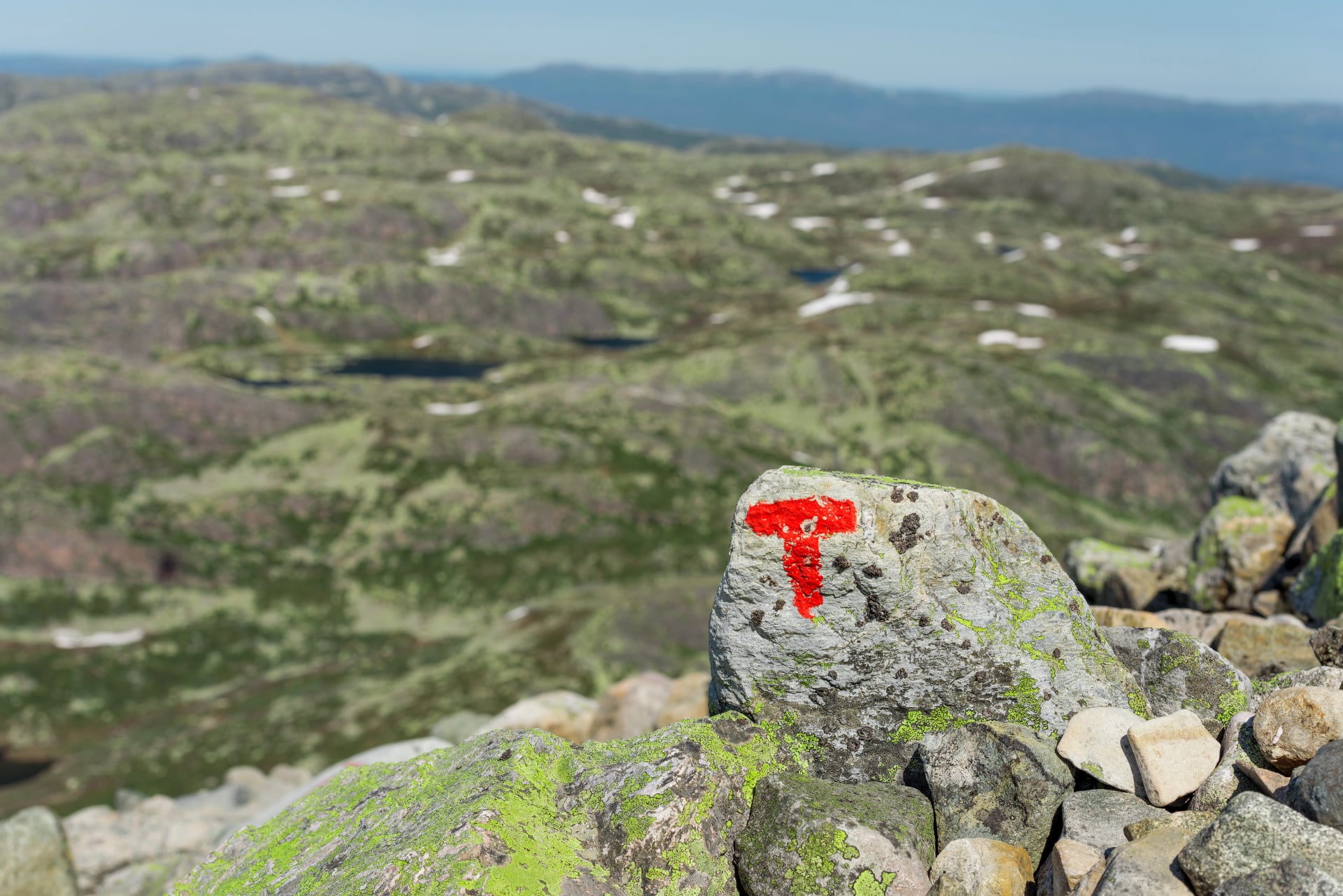
DNT Membership Benefits
Standard membership costs approximately 575 NOK/year; 49€; 57$ (2024 prices) and includes:
40–50% discount on overnight stays in staffed huts
Access to self-service huts (requires DNT key)
Free access to no-service huts
Discounts at partner outdoor shops
Maps and guidebooks at reduced prices
Support for mountain trail maintenance
Example savings:
Staffed hut without membership: ~700 NOK/night; 59€; 69$
Staffed hut with membership: ~400 NOK/night; 34€; 39$
Self-service hut with membership: ~200–350 NOK/night; 17–30€; 20–35$
If you're planning 3+ nights in staffed huts, membership typically pays for itself immediately.
DNT Key (Nøkkel)
The DNT key costs ~250 NOK and unlocks all self-service huts. It's essential for:
Year-round access to self-service huts
Flexibility in route planning
Winter ski touring
You can order the key online through DNT's website or pick it up at DNT offices in Oslo, Bergen or other major cities.
How to Join DNT
Join online at www.dnt.no or at DNT offices in major Norwegian cities. Membership is valid for 12 months from signup. Family memberships are available at discounted rates.
Best Time to Use Norwegian Mountain Huts
The main hiking season runs from late June to late September, when staffed huts are fully open and most high-mountain trails are snow-free.
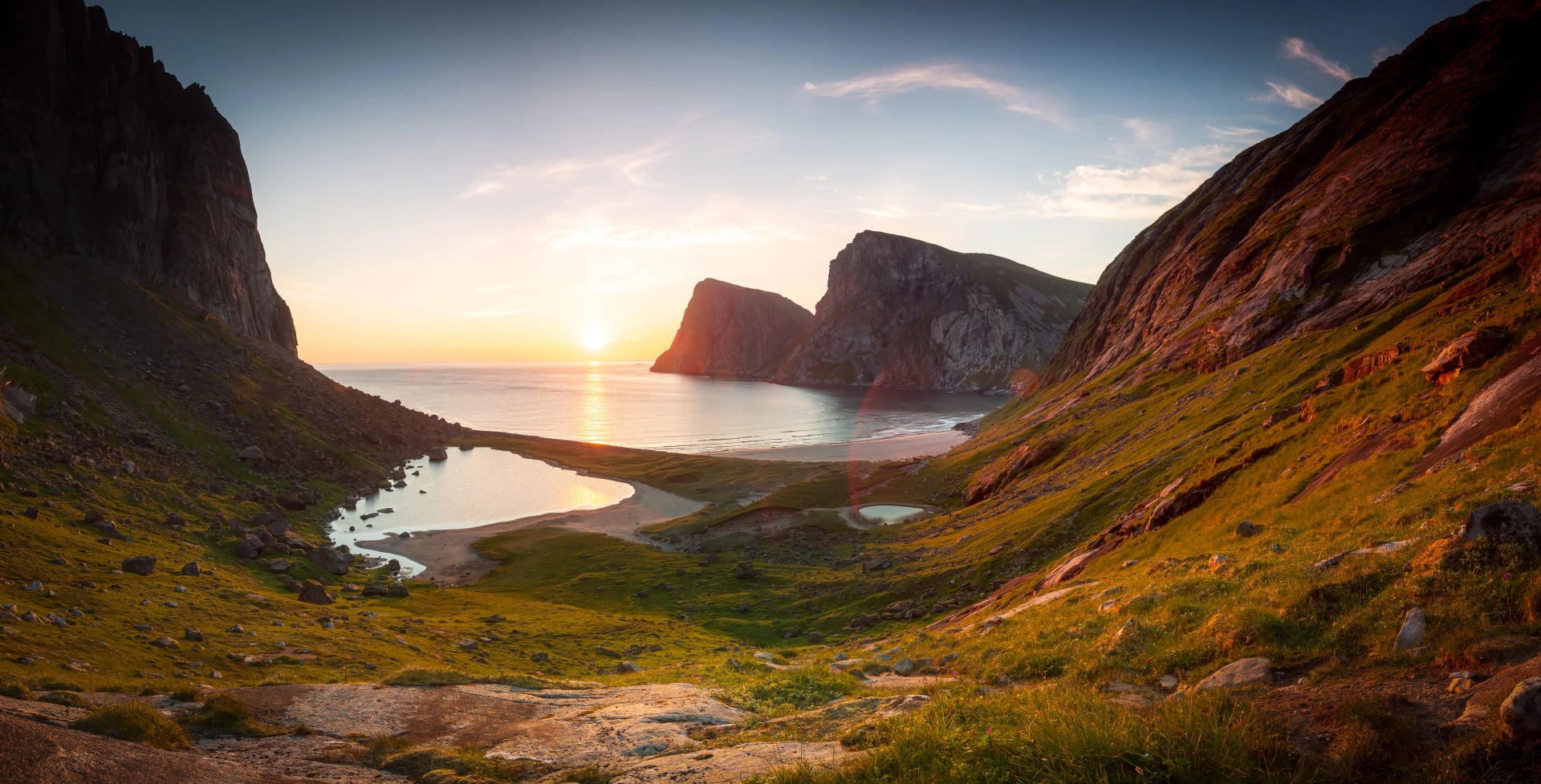
Summer (Late June–August)
Summer is the busiest and most reliable season. Trails are fully accessible, staffed huts operate at full capacity, and weather is most stable.
Late June to early July: Snow melts from high passes, trails open, fewer crowds
Mid-July to mid-August: Peak season, best weather, very busy (book months ahead)
Late August: Slightly quieter, still good weather, cooler nights
July and August coincide with Norwegian summer holidays, so popular routes like Besseggen, Trolltunga and Preikestolen get extremely crowded. Book 3–6 months in advance for these periods.
Autumn (September–Early October)
September offers some of the best hiking conditions of the year. Crisp air, brilliant autumn colours, fewer crowds and stable weather make it a favourite among experienced hikers.
Early September: Still warm, trails open, much quieter
Mid-September: Peak autumn colours, excellent visibility
Late September: First snow possible at high altitude, some huts start closing
Many wardens consider September the best month in Norwegian mountains—crowds have dispersed but weather remains stable.
Spring (May–June)
Spring brings melting snow, swollen rivers and variable conditions. Most high-mountain trails remain snow-covered until late June. Valley huts open earlier, but high-alpine routes are only for experienced hikers with proper equipment.
Winter (October–April)
Winter transforms Norwegian mountains into a ski touring paradise. Staffed huts close, but self-service huts remain open year-round for winter expeditions.
Winter hiking requires:
Ski touring equipment and skills
Winter camping gear
Avalanche knowledge and safety equipment
Experience with winter navigation
How to Book Norwegian Mountain Huts
Booking Norwegian huts varies depending on the type of hut and the organization managing it.
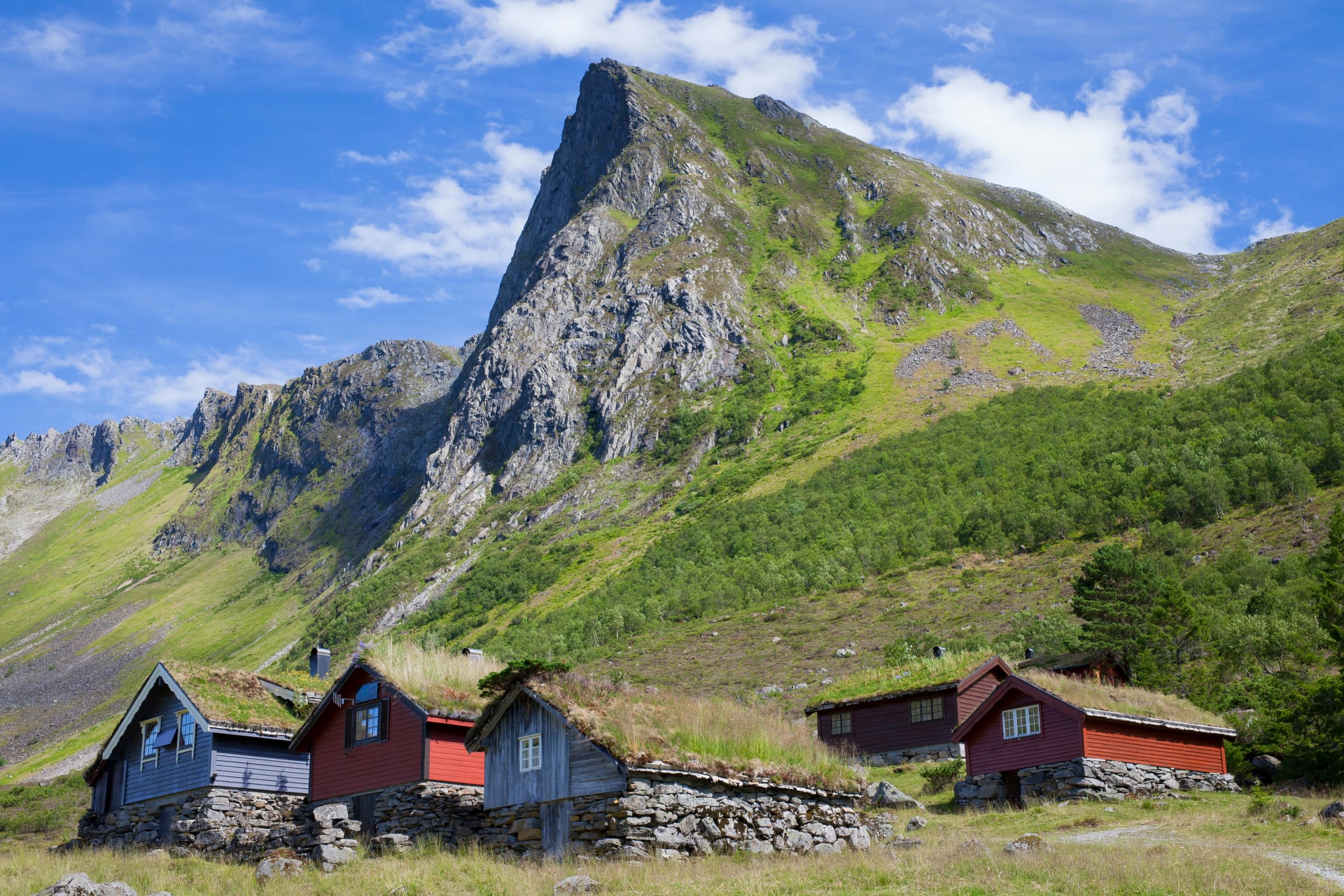
Booking Staffed Huts
DNT staffed huts:
Book online at www.dnt.no
Book by phone (details on DNT website)
Reservation strongly recommended July–August
Payment typically at the hut (cash or card)
Cancellation policies vary by hut
Privately operated huts:
Some popular huts (like Gjendesheim) are privately operated
Book directly through their websites or by phone
Earlier booking required for peak season
Self-Service Huts
Self-service huts don't require advance booking—you simply arrive and use the honesty system to pay. However:
You need DNT membership and key for access
Popular huts can fill up (first-come, first-served)
Register your stay in the logbook at the hut
Pay using forms at the hut (invoice sent later)
Booking Tips
For popular routes (Besseggen, Jotunheimen, Trolltunga):
Book 3–6 months ahead for July–August
Consider September for easier availability
Have backup plans if huts are fully booked
For quieter routes (Hardangervidda, Rondane, northern Norway):
Booking 2–4 weeks ahead is usually sufficient
Self-service huts offer more flexibility
Huts in Most Popular Hiking Regions
1. Jotunheimen
Norway's premier alpine region with the country's highest peaks. Jotunheimen has the densest concentration of staffed huts and attracts the most hikers.
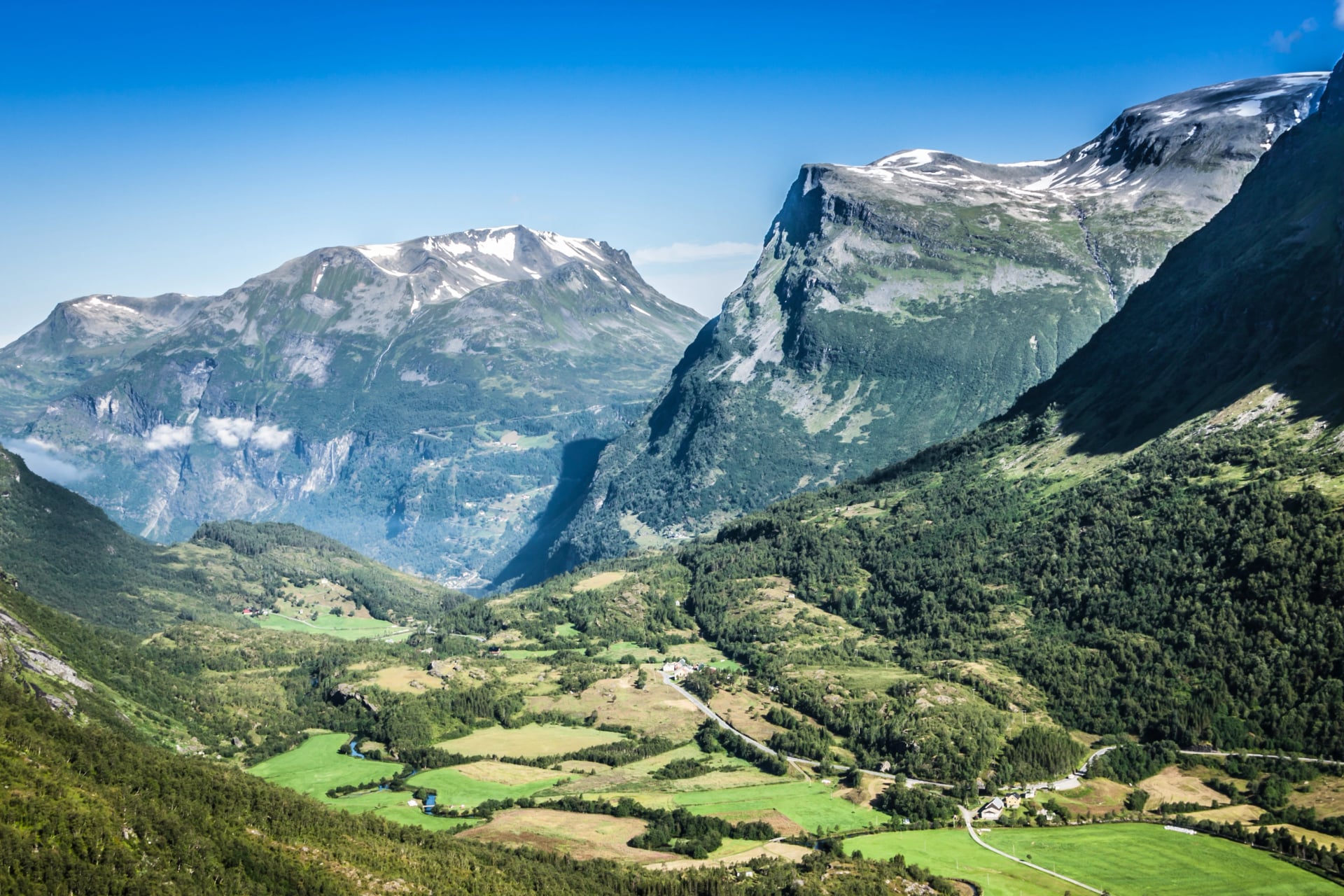
Best for: Alpine scenery, ridge walks, summit hikes, classic Norwegian mountain experience.
Key huts
2. Hardangervidda
Europe's largest mountain plateau, offering vast open landscapes and endless trekking possibilities. Hardangervidda has a well-developed hut network with both staffed and self-service options.
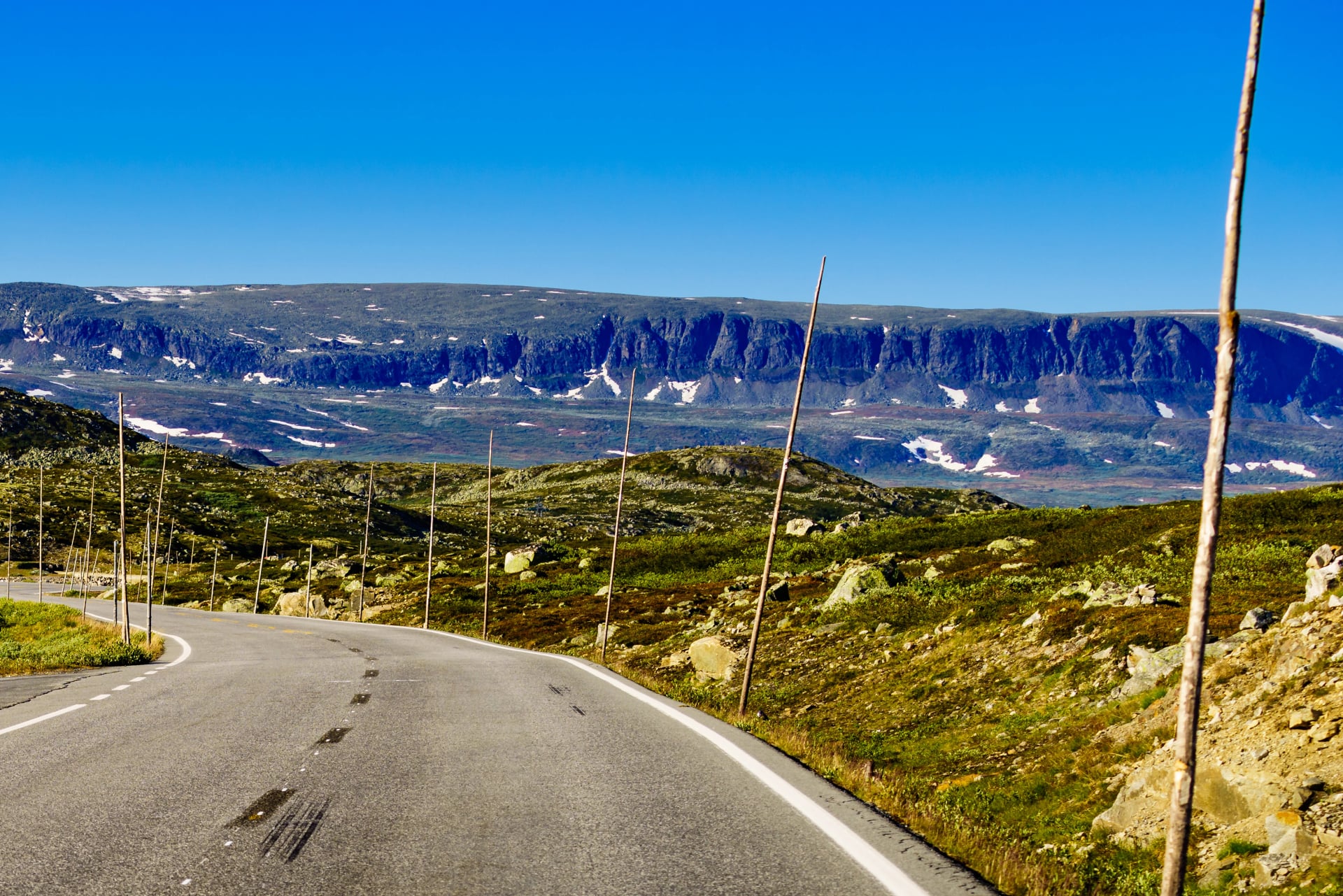
Best for: Long-distance trekking, solitude, wide-open landscapes, fishing.
Key huts
3. Rondane
Norway's oldest national park with gentler, rounded peaks and peaceful highland scenery. Less crowded than Jotunheimen with excellent hut-to-hut routes.
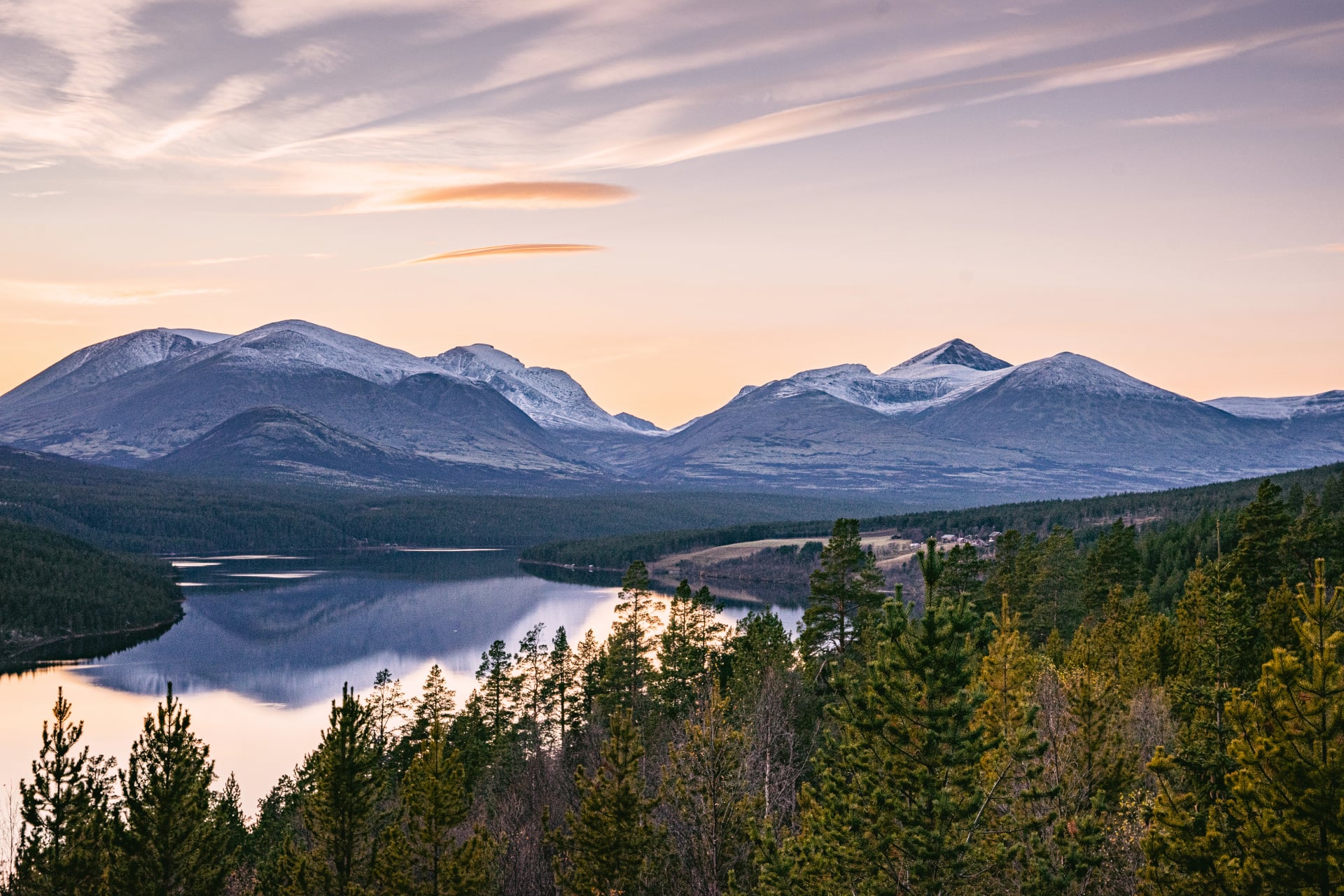
Best for: Quieter trails, gentler terrain, wildlife (reindeer), family-friendly routes.
Key huts
4. Dovrefjell
Wild mountain region known for musk ox sightings and dramatic plateau landscapes. Mix of staffed and self-service huts.
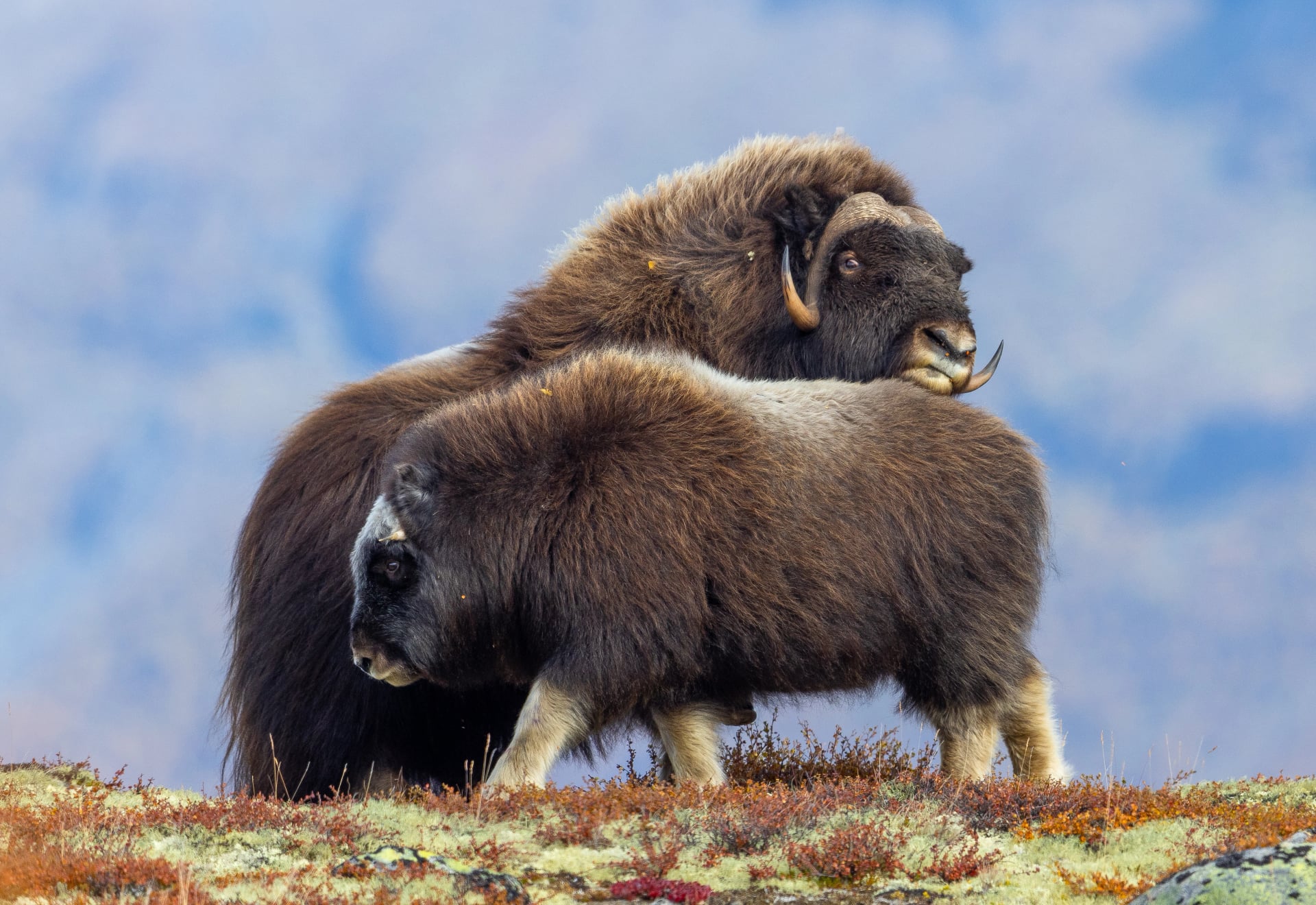
Best for: Musk ox watching, challenging terrain, remote wilderness.
Key huts
5. Lyngen Alps and Northern Norway
Arctic mountain scenery with dramatic peaks rising from fjords. Fewer huts but spectacular landscapes.
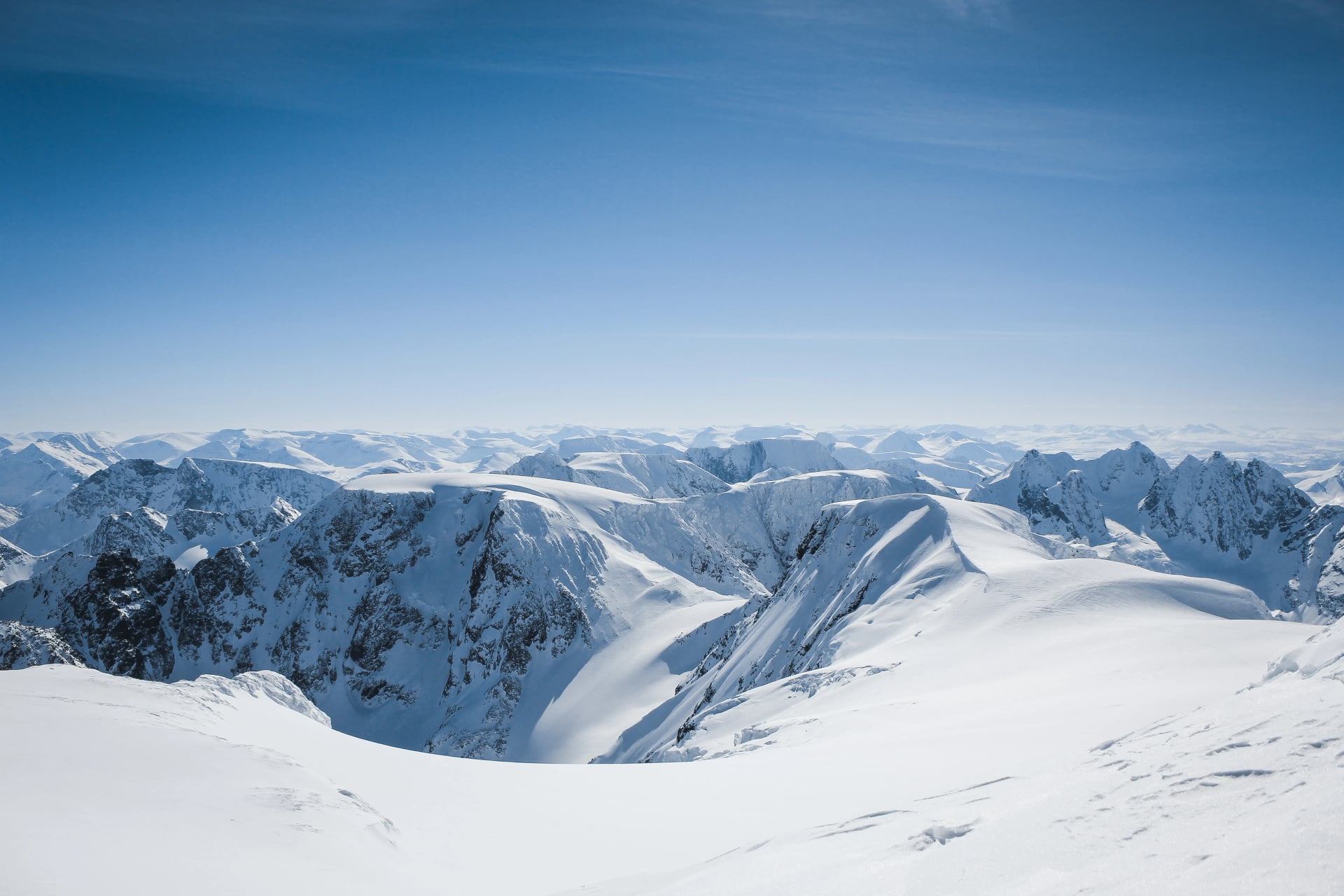
Best for: Midnight sun hiking, Arctic landscapes, coastal mountains, ski touring.
Key areas
Planning Your Norwegian Hut-to-Hut Trek
Choosing Your Route
Norwegian hut networks allow flexible trek planning from single overnights to multi-week traverses.
Classic multi-day circuits (3–5 days):
Besseggen and Gjende area (Jotunheimen)
Glittertind circuit (Jotunheimen)
Rondane traverse (Rondane)
Central Hardangervidda loop
Family-friendly options (1–2 nights):
Gjendesheim to Memurubu (via Besseggen)
Spiterstulen area day hikes
Preikestolen area huts
Long-distance traverses (1–4 weeks):
Jotunheimen traverse (5–7 days)
Hardangervidda crossing (7–10 days)
Nordkalottleden (Arctic trail, 2–4 weeks)
How Far Between Huts
Most Norwegian huts are spaced 4–8 hours walking distance apart, roughly 12–20 kilometers depending on terrain and elevation gain. This creates comfortable daily stages without extreme fitness requirements.
Some remote sections (Hardangervidda, northern routes) have longer gaps between huts, sometimes requiring 8–10 hour days. Always study your route carefully and have contingency plans for weather delays.
Early departures help you complete high terrain before afternoon storms and give you buffer time if hiking takes longer than expected.
Prices and Payment
Typical Costs
Staffed huts (with DNT membership):
Bed + dinner + breakfast: ~400–500 NOK/night; 34–42€; 40–50$
Without membership: ~700–800 NOK/night; 59–68€; 69–79$
Self-service huts (with DNT membership):
Bed only: ~200–350 NOK/night; 17–30€; 20–35$
Without membership: Not available (membership required)
Additional Costs
Packed lunch: 80–120 NOK; 7–10€; 8–12$
Beer or wine: 40–60 NOK; 3–5€; 4–6$
Soft drinks: 30–40 NOK; 3–4€; 3–4$
Shower tokens: 20–30 NOK; 2–3€; 2–3$
Snacks and chocolate: 20–50 NOK; 2–4€; 2–5$
Payment Methods
Most staffed huts now accept credit cards, but cash is recommended as backup. Norway uses Norwegian Kroner (NOK).
Self-service huts use an honesty payment system—you fill out forms at the hut and receive an invoice later. Payment is processed through your DNT membership.
ATMs are available in valley towns (Lom, Otta, Geilo, etc.). Withdraw cash before heading into the mountains, as there are no ATMs at huts.
What to Pack for Norwegian Hut Trekking
You only need essentials since huts provide meals and bedding (in staffed huts).
Essential Hut Items
For staffed huts:
Sleeping bag liner (mandatory for hygiene)
Light hut shoes or sandals
Earplugs and eye mask
Headlamp
Quick-dry towel
Basic wash kit (biodegradable soap)
Warm layers (fleece or down jacket)
Cash (Norwegian Kroner)
Water bottles (2L total capacity)
For self-service huts (add these):
Full sleeping bag (no bedding provided)
Food for all meals
Cooking fuel (gas canisters—sometimes available at huts)
Matches/lighter
Headlamp with extra batteries
Hiking Essentials
Hiking boots (waterproof and broken in)
Trekking poles (highly recommended)
Waterproof jacket and pants
Base layers and hiking clothes (moisture-wicking)
Warm hat and gloves (even in summer)
Sun protection (hat, sunglasses, sunscreen SPF 30+)
First aid kit (blisters, pain relievers, personal medications)
Map and compass/GPS (essential—phone signal unreliable)
Phone and power bank
Snacks (energy bars, nuts, dried fruit)
What NOT to Pack
Sleeping bag (for staffed huts—bedding provided)
Cooking gear (for staffed huts—meals provided)
Excessive clothing
Heavy toiletries
Valuables
Practical Tips for Norwegian Hut Trekking
Emergency Numbers and Safety
Universal Emergency Number: 112
This number works throughout Norway and connects you to emergency services, mountain rescue, medical assistance and police.
Mountain Rescue:
Reached via 112
Norway has specialized mountain rescue teams
Helicopter rescue available in most areas
Safety tips:
Inform hut wardens of your next destination
Check weather forecasts before departing each morning
Carry extra layers—weather changes rapidly at altitude
Turn back if conditions deteriorate
In emergencies, stay calm, call 112, provide GPS coordinates
Mobile Phone Coverage
Phone coverage in Norwegian mountains is patchy and unreliable. Valley towns have good signal, but above 1,200–1,500 meters, service becomes intermittent.

Never rely on your phone as your only safety tool. Carry physical maps, know your route, and inform others of your plans. Most huts have emergency communication via radio or satellite phone.
Norwegian Hut Etiquette
Do:
Remove boots at the entrance
Arrive between 3:00–6:00 PM when possible
Be on time for meals in staffed huts
Keep noise down after 9:00 PM
Hang wet clothes in designated areas
Leave huts cleaner than you found them (self-service huts)
Thank the warden before leaving
Don't:
Wear boots inside
Arrive late without calling ahead
Leave trash anywhere
Use showers for extended periods
Play loud music
Spread gear across multiple bunks
Weather Considerations
Norwegian mountain weather is notoriously unpredictable. Clear mornings can shift to rain, wind or fog within hours.
Best weather forecast sources:
yr.no (Norway's most reliable forecast)
varsom.no (avalanche and mountain conditions)
Hut wardens (receive daily weather updates)
Weather patterns:
Early mornings typically clearest
Afternoon storms common in summer
Fog can descend rapidly on ridges and plateaus
Always carry waterproofs, even on clear days
Wardens receive updated forecasts via radio and can advise you each morning. Take their advice seriously—they know local conditions far better than any app.
Health and Fitness
Altitude: Most Norwegian huts sit below 1,800 meters, so altitude sickness is very rare. However, if you're coming from sea level, take the first day slowly and stay hydrated.
Fitness requirements: Hut-to-hut trekking requires good general fitness but not elite athleticism. If you can hike 5–7 hours with 600–1,000 meters elevation gain while carrying a 7–10kg pack, you'll manage most hut routes comfortably.
Train before your trip with regular hiking or stair climbing. The stronger you arrive, the more you'll enjoy the experience.
Blister prevention:
Break in boots thoroughly before your trek
Wear moisture-wicking socks (avoid cotton)
Apply preventive tape to hot spots
Keep toenails trimmed
Change into dry socks at huts
Useful Norwegian Phrases for Huts
Basic phrases:
Hei (hay) – Hello
Takk (tahk) – Thank you
Unnskyld (oon-shool) – Excuse me/sorry
Snakker du engelsk? (snah-ker doo eng-elsk) – Do you speak English?
Jeg har reservert (yay har reh-sehr-vert) – I have a reservation
Hvor er toalettet? (voor air twah-leh-tet) – Where is the toilet?
Hva blir været i morgen? (vah bleer vair-et ee mor-en) – What will the weather be tomorrow?
God tur! (goo toor) – Have a good hike!
Useful words:
Vann (vahn) – Water
Sti (stee) – Trail
Hytte (hoot-teh) – Hut/cabin
Frokost (froo-kost) – Breakfast
Middag (mid-dahg) – Dinner
Nøkkel (nøk-kel) – Key
Most Norwegians speak excellent English, especially in mountain huts, so language is rarely a barrier. However, making an effort with basic Norwegian phrases is always appreciated.
Wild Camping and Bivouacking in Norway
Norway's Right to Roam (Allemannsretten) allows wild camping almost anywhere, making it one of Europe's most camping-friendly countries.
Wild Camping Rules
You can camp:
At least 150 meters from buildings (houses, huts, cabins)
On uncultivated land (mountains, forests, beaches)
For 1–2 nights in the same spot
Free of charge
You cannot camp:
On cultivated land (fields, gardens, farmland) without permission
In some nature reserves (check local regulations)
Where signs specifically prohibit camping
Best practices:
Leave no trace—take all rubbish with you
Camp on durable ground, avoid fragile vegetation
No fires where prohibited (check local rules)
Camp at least 50 meters from water sources
Be discreet and respectful
Bivouacking Near Huts
Many hikers mix bivouacking with hut stays for flexibility and cost savings. Camping near huts is generally allowed if you follow these guidelines:
Camp at least 150 meters from the hut
Don't use hut facilities unless you're a paying guest
In bad weather, huts will always accept you (pay inside)
Some popular huts have designated camping areas
Camping Equipment for Norway
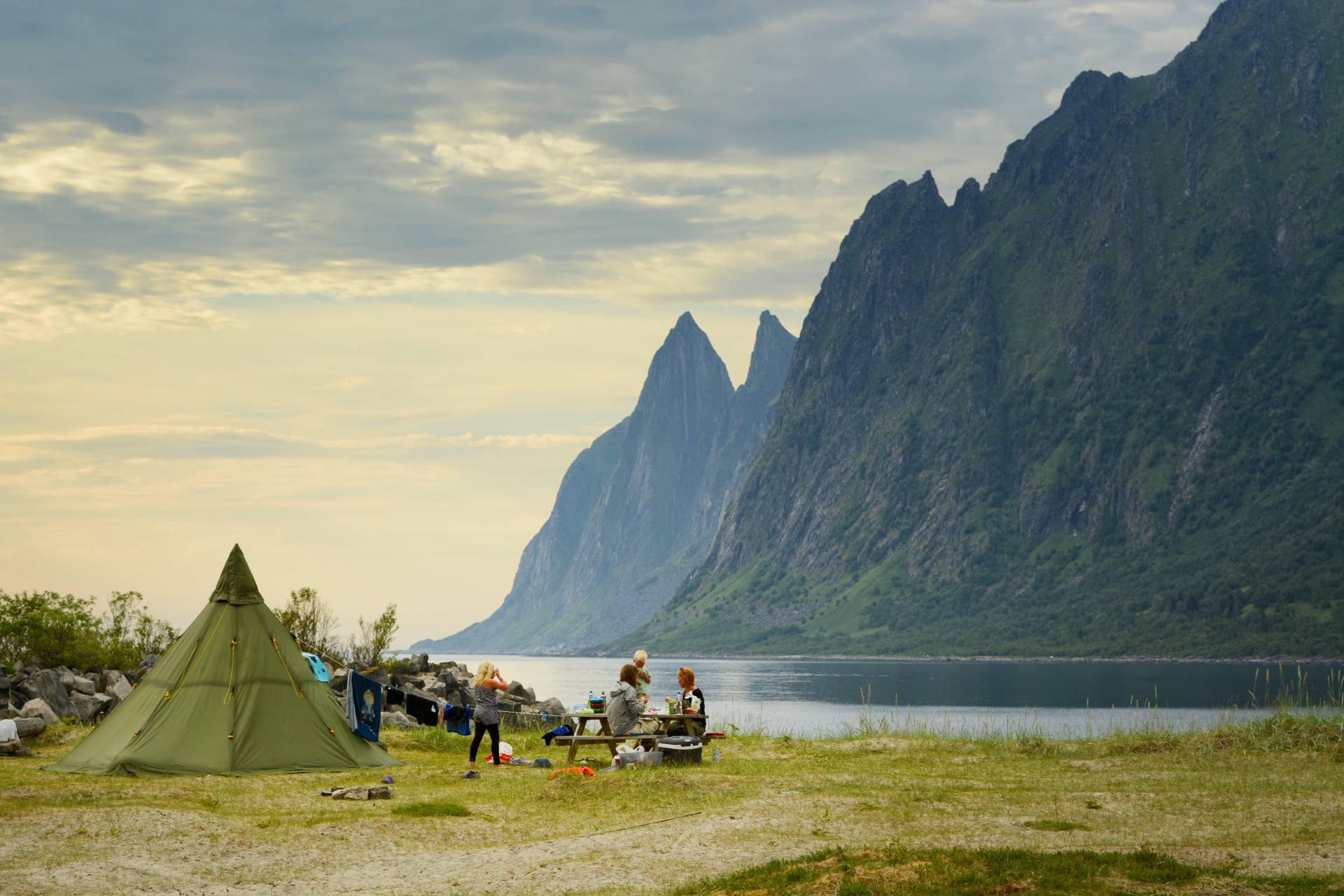
If you plan to camp between huts:
3-season tent (must handle wind and rain)
Warm sleeping bag (0°C to -5°C rating for summer)
Sleeping pad (inflatable recommended)
Camping stove and fuel (gas canisters widely available)
Cooking pot and utensils
Water filter or purification tablets
Final Tips for Norwegian Hut Adventures
Book early for popular routes: Besseggen, Trolltunga and major Jotunheimen huts book out 3–6 months ahead for July–August.
Join DNT: If you're staying 3+ nights in huts, membership saves money immediately.
Pack light: Huts provide meals and bedding (staffed huts), so your pack can stay under 10kg.
Start early: Most hikers leave huts by 8:00–9:00 AM to complete high terrain before afternoon weather.
Respect the mountains: Norwegian mountains are serious terrain. Weather changes fast, trails can be remote, and rescue takes time. Always carry proper gear and know your limits.
Enjoy the social atmosphere: Norwegian huts bring together hikers from across Europe and beyond. Share stories over dinner, exchange route tips, and enjoy the communal mountain experience.
Norwegian mountain huts offer one of the world's best trekking experiences—spectacular scenery, comfortable accommodation, and weeks of exploration without carrying heavy camping gear. Whether you're discovering Norway for the first time or returning to favourite peaks, the hut system opens up endless possibilities.
When you return to the valley, you'll carry more than photos of dramatic ridges and glacial lakes. You'll leave with a connection to Norway's ancient mountains and the people who walk them.
Ready to start planning your Norwegian hut adventure?
We can help you choose the best routes, book the right huts, and create a tailored itinerary that matches your fitness level and timing. From classic Jotunheimen circuits to remote Hardangervidda crossings, we handle the logistics so you can focus on hiking.
Send us your dates, and we'll create a personalised hiking plan for Norway.
Plan with a hiking expert
Free advice from a team that knows these routes inside out - real people, not a bot

HASSLE-FREE
We handle itineraries, accommodations, and anything else you prefer not to deal with, so you can enjoy a carefree hike.

BOOK WITH CONFIDENCE
We are a financially protected company, fully bonded and insured, keeping your money safe and allowing you to travel with confidence.

TRIED & TESTED ADVENTURES
Only the best hut to hut hikes in Europe, cherry-picked by our local team with an in-depth knowledge of the region.

UNBEATABLE SUPPORT
Our 24/7 customer support is where we show our passion, bringing you a better experience by making your well-being our number one priority.